



















Welcome to Smart Code News. This month, we are talking about a different kind of failure. For decades, when software broke, we had a reliable script: check the logs, find the error, trace the stack, fix the bug. The execution trace told you exactly where the deterministic logic went wrong. As of this year, that script no longer works for your most critical systems.
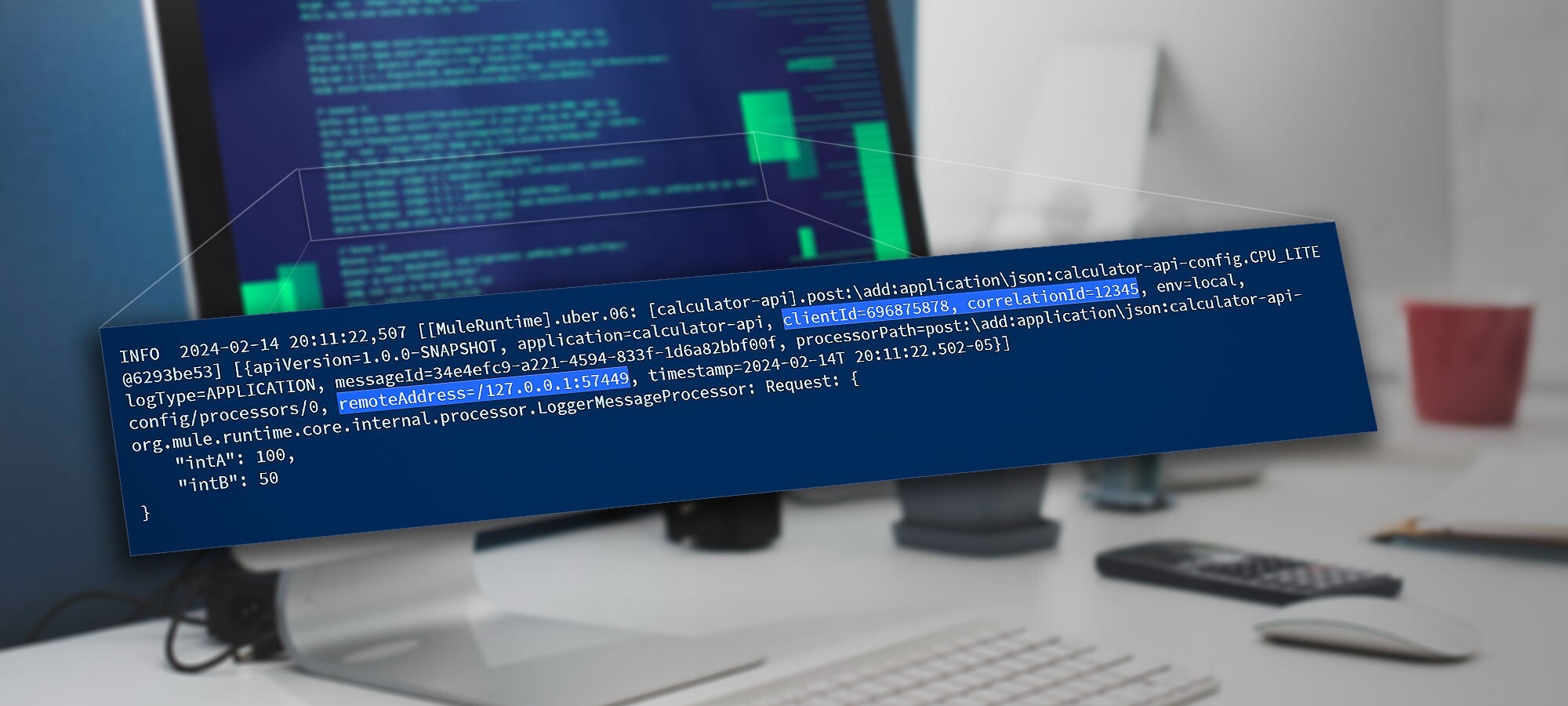
We have officially entered the era of the opaque agent. When an AI agent misbehaves in production, your standard infrastructure logs look flawless. The execution trace shows the correct API payloads, valid tool invocations, and well-formed JSON outputs. The system thinks everything went perfectly because the trace only captures actions, not the reasoning path that selected them. The failure is invisible in the logs.
For the API ecosystem, this is not an edge case. Every team running autonomous workflows has experienced the same pattern: a customer complains, you pull the logs, and everything looks green. The agent called the right endpoint. It formatted the request correctly. It received a 200. But the outcome was wrong because the agent believed something that was not true. You can audit the output. You cannot audit the thought.
This month, we explore the auditing void. We will unpack why agent logs tell you what but almost never tell you why, why storing complete reasoning traces is financially prohibitive at scale, and how we can build new debugging infrastructure that captures intent without collapsing under the weight of telemetry. In an era where agents make decisions, we need more than execution traces. We need to know what they believed when they decided.
The Illusion of the Valid Trace
To understand why agent auditing is failing, we have to understand how monitoring works today. When you deploy a traditional service, your observability stack is built on a simple and effective model: capture what happened, when it happened, and what error emerged. Logs, metrics, and traces give you a complete, deterministic picture of system behavior. If a request fails, you can trace the exact path through your code to the line that broke.
For LLM-driven agents, this model breaks silently. Today, most teams monitor agents the same way they monitor any other service. They log the API requests to the model provider. They capture the tool calls the agent made. They record the final response. The execution trace shows a sequence of valid actions, well-formed JSON, and successful HTTP status codes. Everything looks green.
The problem is that this trace captures only the output of the agent's reasoning, not the reasoning itself. When an agent decides to call the wrong tool, the log shows a valid tool call. When it hallucinates a parameter, the log shows a well-formed payload. When it follows a reasoning chain that leads to a bad outcome, the log shows a successful execution. The system thinks everything went perfectly because the system only looks at syntax, not semantics.
This is the monitoring model we have today. It is built for deterministic systems where a valid action is the correct action. It assumes that if the API call succeeded, the decision behind it must have been sound. But agents do not operate on that logic. They can call the right endpoint for the wrong reason. They can produce valid JSON that solves the wrong problem. They can complete every step of a workflow and still fail because they believed something false at the very first step.
The Cost of Knowing Why
This is not a small oversight. It is a structural consequence of how we built our observability systems. For decades, we optimized for capturing actions because actions were all that mattered. A deterministic system's behavior was fully explained by its execution trace. There was no hidden layer of reasoning to audit because there was no reasoning at all.
That assumption is now a liability. When an agent calls the right API with the right payload but produces the wrong outcome, the execution trace is not just incomplete. It is actively misleading. It tells you everything worked. You spend hours looking for a bug in your code that does not exist while the real failure, a reasoning error buried in a transient context window, has already been garbage collected.
The challenge is not just technical. It is economic. Storing complete reasoning traces for every agent decision at scale would bankrupt most monitoring budgets. A single multi-turn agent conversation can generate thousands of tokens of internal reasoning before producing a single API call. Multiply that by millions of calls, and you are storing petabytes of text just to debug the occasional failure. Most teams make the rational choice: they store nothing, hope for the best, and accept that some failures will remain unexplained.
But the cost of not knowing is compounding. Every unexplained agent failure erodes trust. Every postmortem that ends with "we cannot determine why the agent made that decision" becomes a liability. Regulators are starting to ask for audit trails that include decision justification. And the teams that cannot provide those trails will find themselves unable to deploy agents in regulated environments at all.
Closing The Gap on Reasoning Auditability
Closing the gap is not about storing more logs. It is about redefining what we capture and how we surface intent without collapsing under storage costs. To move from blind acceptance to verifiable reasoning, engineering teams must master the five foundational disciplines that make agent decision-making auditable. Here are the practices to embed now:
Selective Reasoning Capture → Signal Over Noise
Storing complete, multi-turn context snapshots at every decision point is financially and computationally prohibitive at enterprise scale. The solution is not full capture. It is smart capture. Deploy sampling strategies that record detailed reasoning traces for a percentage of traffic, then switch to trigger-based recording when anomalies are detected. When response times spike or tool call patterns shift, the system begins capturing full context. This gives you forensic depth without the storage bill of always-on telemetry.
Deterministic Extraction → Structured Signals from Unstructured Thought
You do not need to store the entire reasoning trace. You need the signals embedded within it. Build extraction pipelines that pull structured data from reasoning traces at inference time: confidence scores for each decision, sources the agent cited, alternatives it rejected, and the stated justification for its chosen path. Store these as discrete fields, not raw text. When an agent fails, you can query for "confidence below 0.6" or "cited outdated documentation" without sifting through terabytes of logs.
The Observer Pattern → Watch, Don't Store
Not every reasoning step needs to be archived. Deploy lightweight sidecar observers that watch agent decisions in real time without persisting the full context. The observer evaluates reasoning against expected patterns and flags only deviations. An agent that suddenly shifts from conservative parameter choices to exploratory calls triggers an alert. An agent that starts citing internal design documents outside its scope triggers a log. The observer pattern gives you runtime visibility without the storage tax of recording everything.
Post-Inference Reconstruction → Rebuild, Don't Preserve
If you cannot afford to store full reasoning traces, reconstruct them after the fact. Use smaller, cheaper models to summarize and explain decision paths from available signals. This trades perfect accuracy for practical auditability. You may not know exactly what the agent believed at every step, but you can get a reliable reconstruction of its likely reasoning. For post-incident analysis, this is often sufficient. And it costs a fraction of storing every token.
Audit by Assertion → Verify Before Execution
The most efficient audit is the one that never happens. Define expected reasoning boundaries before deployment and verify them during execution without storing the verification itself. An assertion might be "the agent must not call the payments API more than once per session" or "the agent must cite a source from the approved knowledge base." Log only when an assertion fails. This shifts the default from exhaustive recording to exception-based auditing, reducing storage volume to only what matters: the failures.
This is the new baseline for agent auditability: systems built not just to execute correctly, but to leave a verifiable trace of why they executed that way. The agent thinks. Your audit must capture the thought.