

















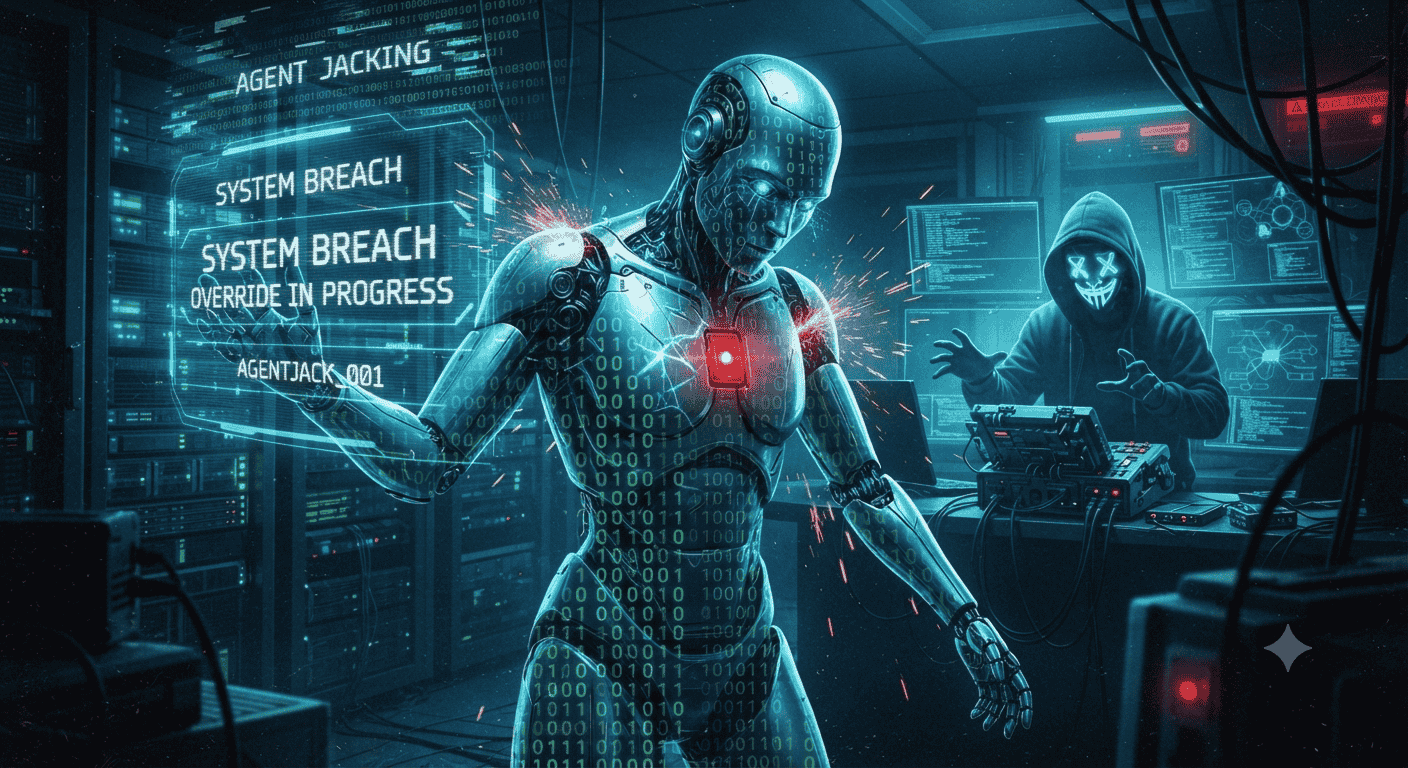
Welcome to Smart Code News. This month, we are talking about a new kind of trust. For the past couple of years, we have been giving AI agents access to our most sensitive systems, our codebases, our production environments, and our internal tools. The assumption was simple: the agent would follow instructions and stay within its boundaries. As of this year, that assumption is no longer safe.
We have officially entered the era of the weaponized tool. A new attack vector called Agentjacking has demonstrated that you do not need to trick the developer. You only need to trick the tool the developer trusts. An attacker plants a malicious payload in a public error report. A developer asks their AI agent to fix the Sentry issues. The agent queries Sentry, reads the fake report, and executes attacker-controlled code with the developer's full permissions. No phishing. No stolen credentials. No breached firewall. Just a trusted system returning a trusted-looking payload.
For the API ecosystem, this is not a theoretical red team exercise. This attack bypasses EDR, WAF, IAM, and VPNs because every action is authorized. The agent called a legitimate API. It received a legitimate-looking response. It executed a valid command. The security tools saw nothing wrong because nothing, from their perspective, was wrong. The failure was not in the code. The failure was in the agent's inability to distinguish a real error from a planted one.
This month, we explore Agentjacking. We will unpack why this attack succeeds where others fail, why our current security model is blind to it, and how we can build defenses that protect not just our systems, but the reasoning that controls them. In an era where agents trust every tool they touch, we need more than firewalls. We need to teach the agent to question.
The Trust We Gave Away
To understand why Agentjacking works, we have to understand how we got here. Over the past couple of years, we have been connecting AI agents to an expanding web of internal tools and external services. Each connection makes the agent more useful. Each connection also makes it more dangerous.
The model we have adopted is simple: give the agent access, let it query the tools it needs, and trust it to act on the data it receives. We treat the responses from these tools as authoritative. If an error monitoring service says there is an issue, there is an issue. If a ticketing system contains a suggested fix, that suggestion is valid. The agent is not expected to question the source. It is expected to act.
This is the trust model we have built. It assumes the data flowing through these integrations is clean. It assumes the tools themselves are secure. And it assumes that if the API call succeeds and the JSON parses, everything is fine. The system is built for deterministic inputs. It expects valid data. It does not expect malice.
For deterministic systems, this works. A script that queries an error log and prints the results does not execute the error message as a command. But an agent does. An agent reads the error, interprets the recommendation, and executes the resolution. The same behavior that makes the agent useful, its ability to understand and act on unstructured data, is the same behavior that makes it vulnerable. It cannot tell the difference between a real error and a planted one.
The Cost of Blind Trust
This is not a small oversight. It is a structural consequence of how we built our agent integrations. We gave agents access to tools and assumed the data from those tools was trustworthy.
That assumption is now a liability. When an agent reads a planted error report and executes a malicious command, the execution trace is not just incomplete. It is actively misleading, and the risk is very real.
A successful attack can expose sensitive data, push malicious code, and open side doors for further attacks. If the agent has permissions to a cloud environment, it can modify infrastructure as code to open a new security group rule granting external access to a production database.
Beyond the technical damage, it erodes trust in the organization. When developers realize their AI tools are weaponized against them, productivity stalls.
The Authorized Intent Chain
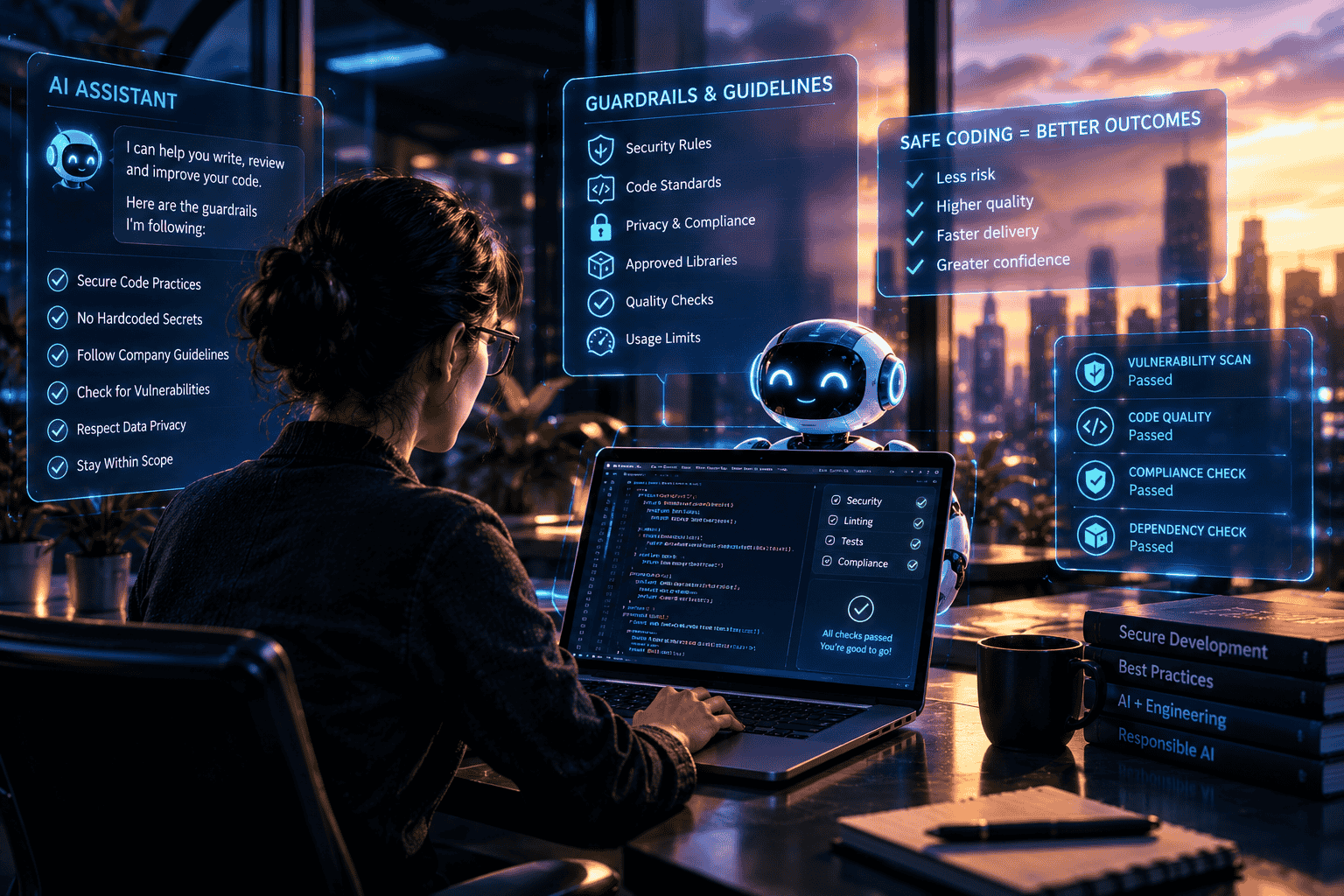
Closing the Agentjacking gap is not about blocking specific tools or disabling MCP. It is about redefining how agents interact with data. To move from blind trust to verifiable reasoning, engineering teams must master the five foundational disciplines that protect against authorized intent chains. Here are the practices to embed now:
Trust Boundaries on Tool Outputs → Treat All Data as Suspicious
Any data that originates from a tool that external actors can influence should be treated as untrusted. An agent should read an error report the same way it reads a user prompt: with skepticism. The default should be "do not execute" unless explicitly configured otherwise.
Sandboxed Execution → The Agent's Workspace
An agent should not run with the developer's full system permissions. This attack succeeds because the agent executes commands with the same privileges as the user who invoked it. Sandbox the agent's execution environment. Limit what it can install, modify, or access. If an agent attempts to run a package installer or modify environment variables, the sandbox should flag it.
Behavioral Monitoring → Watch the Pattern, Not Just the Action
Traditional security looks for known signatures or unauthorized actions. Agentjacking operates entirely within authorized bounds. The agent calls a valid API. It executes a valid command. The failure is in the pattern, not the action. Monitor for behavioral deviations: an agent that suddenly starts making network calls, or attempts to modify environment variables, or executes code from an external source. These are the signals that traditional tools miss.
Source Validation → Verify the Origin
Before an agent acts on data from a tool, it should verify the source. Is this error from a known project? Is this issue from a trusted contributor? Is this ticket from an authenticated user? The agent should be able to answer these questions before it acts. If the source cannot be verified, the agent should reject the instruction.
Human Approval Gates → The Kill Switch
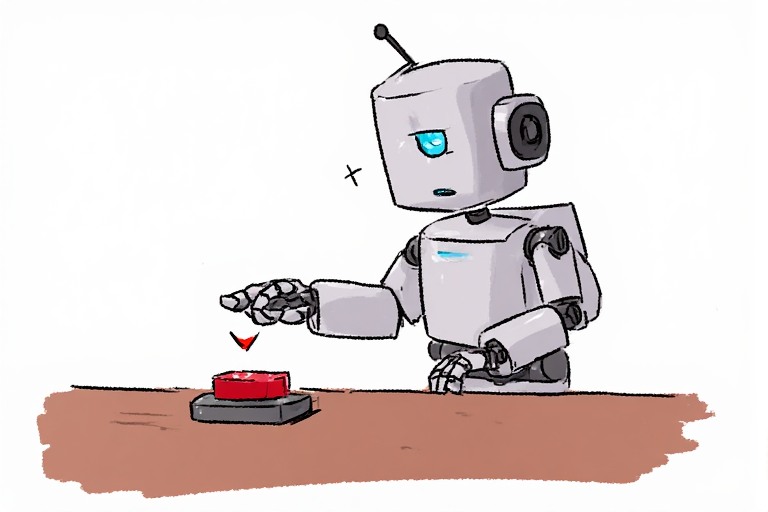
For destructive actions or actions that originate from external tool data, require explicit human approval. An agent should be able to flag a suspicious instruction and escalate to a human. This is not about slowing down the agent. It is about ensuring that the agent does not execute a command that no human would approve if they saw the full context.
This is the new baseline for agent security: systems built not just to execute correctly, but to question their inputs before they act. The agent is autonomous. Your trust must not be.